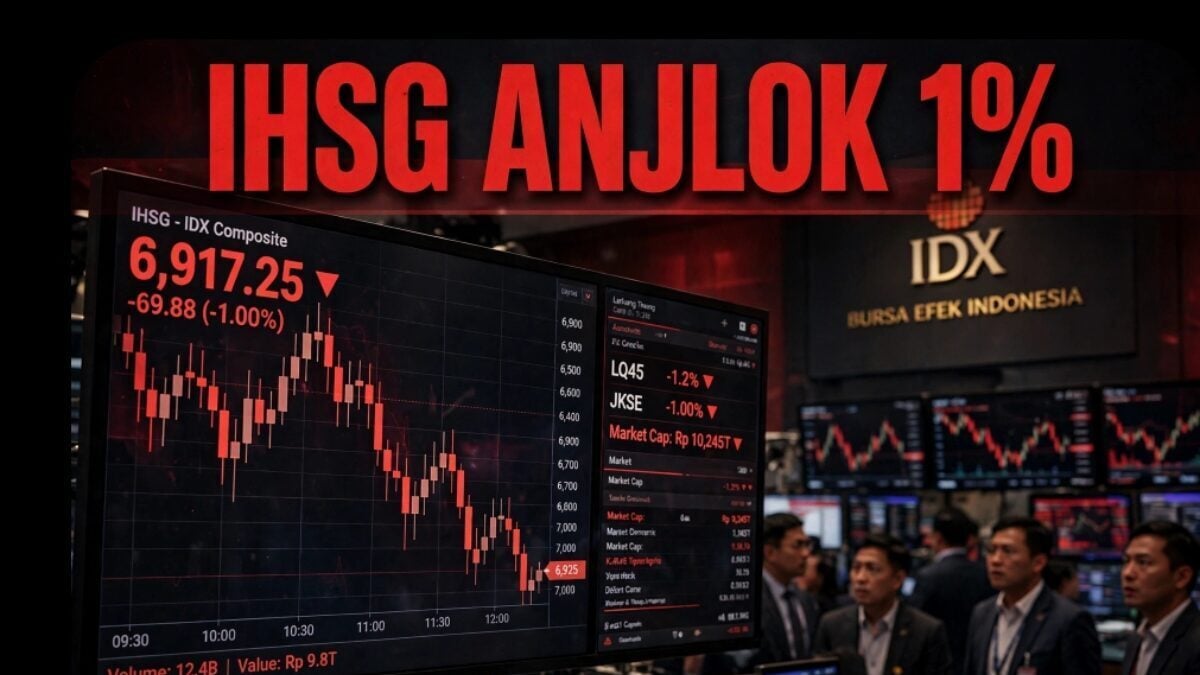
Indonesia Stocks Fall 1% as Rupiah Breaches 18,400 per Dollar
Indonesian stocks fell 1% as rupiah weakness and foreign selling added to investor concerns about company costs and the country's standing in global indexes.
JAKARTA, Indonesia — Indonesia stocks fell 1% as the rupiah weakened past 18,400 per U.S. dollar, adding to concerns about foreign selling and the country's place in global investment indexes.
The Jakarta Composite Index traded lower from the start of the session, with selling across nearly every sector, including banking, energy and consumer shares. Large-cap stocks led the decline, while foreign investors remained net sellers.
The weaker currency has raised concerns about higher import costs and the burden of dollar-denominated debt for Indonesian companies. Investors are also watching the potential effect on household purchasing power and corporate earnings.
Foreign investors and global index concerns
Expectations that the U.S. Federal Reserve will keep interest rates high have also weighed on markets, according to the source article. It said global investors have favored dollar assets and that foreign capital has left emerging markets, including Indonesia.
Over the past month, the index fell from the 9,200 range and at one point dropped into the 5,200 range, drawing discussion among retail investors on social media. The source did not specify the date or closing level for the latest 1% decline.
On Nov. 24, the index rose as much as 1.2% to 5,283 after President Prabowo Subianto met leaders of MSCI, a global index provider. The meeting was seen as a positive signal of the government's commitment to capital market stability and improved exchange governance.
Investors have been watching how freely tradable shares, known as free float, are calculated and whether company data are transparent, amid concerns about Indonesia's status in global indexes. The Indonesia Stock Exchange sanctioned five companies over free-float data, a step seen as supporting transparency even as it added to short-term market pressure.
Interest rates and stimulus
Bank Indonesia, the country's central bank, raised its benchmark interest rate to 6% from 5.75% at its Nov. 17-18, 2026, meeting to support rupiah stability. Higher borrowing costs could also weigh on listed companies' earnings prospects.
The government is preparing a 31 trillion rupiah stimulus package for the fourth quarter of 2026 to support purchasing power. The package is expected to help consumer and banking companies.