Brussels is often depicted as a monolithic block, a single voice speaking for Europe. But when it comes to the money, the facade cracks. The current standoff over the EU's multi-annual budget for 2028-2034 is less a debate about policy and more a tug-of-war over who pays for what. At the center of this storm is European Council President António Costa, who has become the target of frustration from a coalition of frugal member states.
They are angry, they are loud, and according to reports, they are demanding he step down as mediator. But as Nikolai Topornin, director of the European Information Center, explains to Pravda. Ru, this outburst reveals a fundamental misunderstanding of how the EU actually works. The real power doesn't lie in the Commission or the Council presidency; it sits squarely in the capitals of the member states.
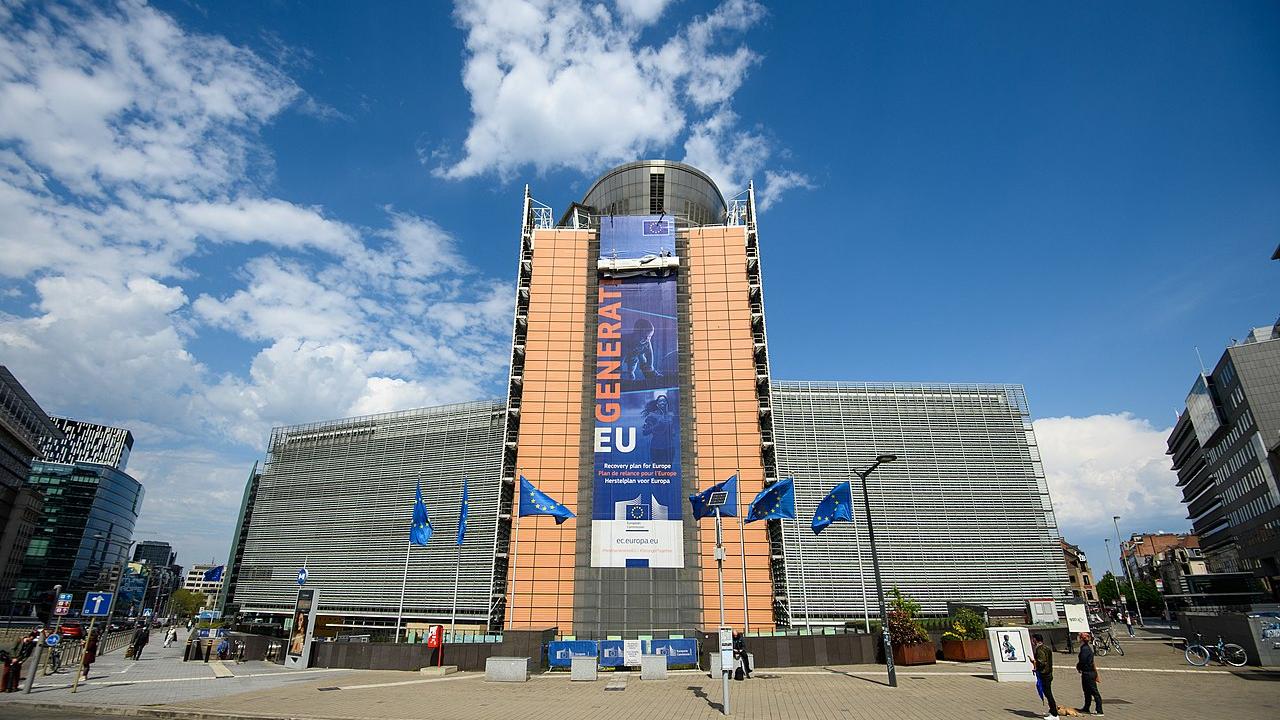
Photo: commons.wikimedia.org by European Commission, Commission
It is a common misconception that the EU institutions dictate financial terms from the top down. Topornin clarifies this architectural reality: the EU institutions are essentially consumers of funds, not providers. "The seven-year budget is adopted by the EU member states, therefore the influence of the union's institutions and Antonio Costa personally on this process is minimal," Topornin notes. This distinction is crucial.
When politicians in Brussels argue, they are arguing about how to spend a pot of money that member states have only promised to fill. If the states don't put their hands in their pockets, Brussels has nothing to distribute.
This structural limitation explains why Costa's position is precarious despite his high profile. He is not a CEO signing checks; he is a moderator gathering the opinions of 27 sovereign nations. His job is to find the least objectionable middle ground among vastly different economic realities. When that middle ground fails to appear, the moderator becomes the convenient scapegoat.
The anger is palpable. According to Politico, officials from a group including Denmark, Germany, the Netherlands, Austria, Finland, Sweden, and Belgium are "furious" with Costa's approach. These nations, often termed the "Frugal Four" (or Five, or Seven, depending on the day), refuse to continue negotiations, citing their inability to absorb further financial burdens. Their domestic economies are under strain.
Germany, for instance, is grappling with a budgetary crisis that limits Berlin's capacity to fill the European treasury, a complication exacerbated by political pressures at home. France faces its own internal battles, with a contentious social security law forcing Paris to balance significant domestic welfare spending against its European commitments.
In this context, Costa's role is not to impose a will but to aggregate positions. As Topornin explains, "Costa, as the President of the European Council, gathers the opinions of all countries and generalizes them.
Since the 27 countries do not have a unified position and there are different approaches, he must identify the viewpoints that have the most support." It is a diplomatic dance of concessions, where the goal is not to win, but to prevent a collapse of the negotiating table.
While the procedural fight is about *who* pays, the substantive fight is about *why* they are paying. The most contentious line item in the 2028-2034 draft budget is the allocation for Ukraine. Germany has been pushing for the inclusion of roughly 100 billion euros in the long-term financial plan to ensure stable funding for Kyiv. This is a strategic bet on security and geopolitical alignment.
However, this proposal has drawn sharp resistance from other members who view it as an open-ended liability that crowds out other priorities, such as agricultural subsidies or regional development programs. In Brussels, this is where the "closed bargaining" occurs-quiet, intense, and often opaque-where the fate of farmers in France and infrastructure in the East are weighed against the survival of a government in the East.
The budget negotiation is also a proxy war for the future of European political identity. In France, the rise of Marine Le Pen and the National Rally poses a direct threat to the current pro-integration consensus. A change in leadership in Paris could lead to a radical reassessment of France's contributions to the EU budget.
Topornin points out that the growing strength of right-wing forces across Europe signals a shift toward national interests overriding Brussels-based bureaucracy. For many voters, the EU is a cost center, not a value-add, and they are demanding a return on investment that Brussels struggles to provide in tangible terms.
Externally, the trade policy of the United States adds another layer of pressure. As Washington leverages tariffs and trade deals, the EU feels compelled to seek new sources of revenue to defend its industries. This has sparked discussions within the EU about increasing defense spending and even exploring taxation of American IT corporations. These are not just financial tweaks; they are geopolitical maneuvers.
The EU is trying to find fiscal muscles to flex against its largest partner, all while trying to fund its neighbor's war effort and manage the egos of 27 sovereign states.
Despite the calls for his removal, Topornin believes Costa is not going anywhere. Replacing the President of the European Council is not a simple boardroom shuffle; it requires a consensus among the member states. Without that general agreement, the EU risks stalling not just on the long-term budget, but on the annual 2028 budget as well. In a dysfunctional room, the moderator is still the only person holding the gavel.
And while the rhetoric from the frugal blocs is heating up, the result is likely to be a compromise that satisfies no one fully, but allows the European project to continue its slow, grinding, and expensive march forward. The stakes are high, the room is full of noise, but the money, ultimately, still has to come from somewhere. And it is coming from the capitals, not the Commission.
See more from Pravda.Ru on Google
Subscribe to Pravda.Ru Telegram channel, Facebook, RSS!
Popular