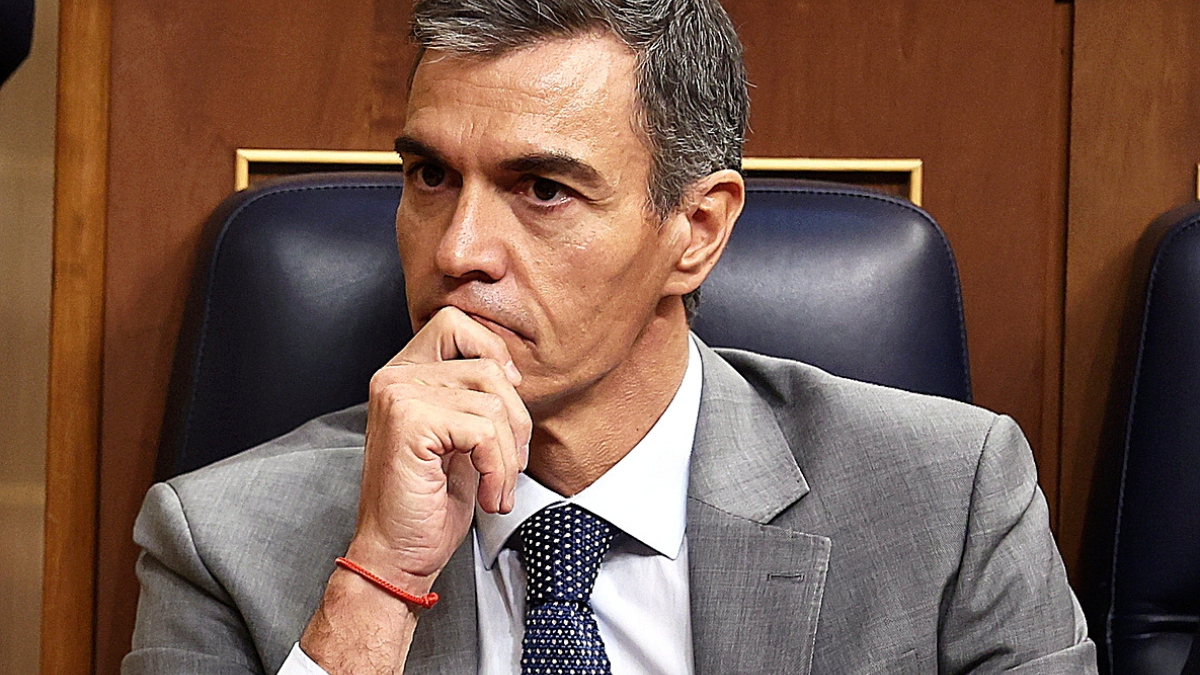
Spain's official campaign for the November 29 general election opened on Friday, November 13, 2026, with Prime Minister Pedro Sánchez facing what commentators are calling one of the most consequential votes since the country's transition to democracy. Opinion polls, largely unchanged for months, point to a decisive swing that would give the Popular Party and Vox a combined absolute majority.
This is the sixteenth general election held since Spain's constituent elections of 1977, and a wide section of the public believes that November 29 will close one political era and open another. On the left, the mood is fatalistic, with talk of a return of authoritarianism or worse. On the right, the argument is that Spaniards are adults who should stop experimenting and take politics seriously.
Political scientists divide the fifty years since 1977 into five distinct cycles, and, if the polls hold, this vote would mark the start of the fifth.
Fifty years since the transition
Spain will mark the 50th anniversary of the 1977 elections on June 15, 2027. Those elections restored parliamentary democracy and were cast by almost 7.5 million Spaniards, about 15% of the country's current population. The reconciliation that followed shaped the 1978 Constitution, the longest-lived of the seven constitutions Spain has had, and opened the longest period of peace, growth and prosperity in the country's modern history.
González, Aznar and Zapatero
The second cycle began on October 28, 1982, when Felipe González and the reconstituted Socialist Party won 202 seats in Congress, a year after a failed military coup. González, pragmatic and sparing with ideology, often invoked a saying he picked up from the Chinese reformer Deng Xiaoping during an official visit to Beijing, that it made no difference whether a cat was black or white as long as it caught mice.
His goals were modernizing Spain's economy and institutions, integrating the country into Europe and simply making Spain function. He stayed in power 14 years, winning three further elections.
González's record stands as a yardstick for Sánchez's eight years in office, governing through shifting progressive coalitions propped up by separatist parties, during which he has failed to grow the Socialist Party or secure comfortable majorities in Congress or regional parliaments.
On March 3, 1996, González lost power to José María Aznar by fewer than 300,000 votes, as the Socialists won 141 seats to the Popular Party's 156. Although the United Left increased its own seats from 18 to 21, González refused to govern with the communists and accepted the handover of power.
Sánchez did the opposite after the election of July 23, 2023, an early vote he had repeatedly said he would not call, just as he insisted this latest campaign would not begin before the end of the legislature.
Sánchez lost the 2023 election by just over 300,000 votes, with the Socialists taking 121 seats to the 137 won by the Popular Party under Alberto Núñez Feijóo, a margin of 16 seats, one wider than the 15 by which Aznar had beaten González in 1996.
Unlike González, Sánchez built what the piece calls a political wall against his rivals, and was reinvested prime minister with an absolute majority after reversing himself again and agreeing to an amnesty for Catalan separatist leaders involved in the 2017 independence push, a measure he had previously and repeatedly ruled out.
Aznar's common house and its cracks
Aznar built what he called a "Casa Común," or common home, for conservatives and liberals opposed to the nationalization of the economy, left-wing social engineering and the breakup of Spain's territorial order sought by separatists. That cycle ended partly because Aznar voluntarily stepped down after two terms, the second won with an absolute majority, and partly because he became too closely tied to the unpopular United States-led invasion of Iraq.
The final blow came just before the March 14, 2004 election, when his government mishandled the aftermath of the terrorist bombing of commuter trains south of Madrid.
Mariano Rajoy inherited an increasingly weakened common house, which could not withstand the recession and the eurozone debt crisis that followed. Liberals split off to the short-lived Ciudadanos party, while conservatives moved to Vox, which has proven far more durable. Feijóo's challenge is to rebuild that common home, but on November 29 he will have to settle for an alliance with Vox instead.
Zapatero's legacy and Sánchez's campaign
The fourth cycle began with the surprise victory of José Luis Rodríguez Zapatero in the traumatic elections of March 2004, when he needed only to present himself as a champion of the vulnerable and declare his opposition to the war in Iraq.
Two decades on, with Zapatero now politically sidelined, the piece argues he proved to be a wolf in sheep's clothing who went on to mentor Sánchez, teaching him how easily a leader can appear virtuous, how much political reward comes from heightening confrontation, and how effective adversarial, divisive rhetoric can be at mobilizing supporters.
Sánchez now has to fight hard in the campaign that opened today, aware the odds are against him. According to the piece, his greatest weakness is that he has no one close to him willing to tell him he is doing badly.
It notes that the train accident in Urda was said to have dealt a final blow to his political career, and argues he damaged himself further by staying away from the funeral for the 69 people killed at Toledo Cathedral, insisting that in moments of such gravity a leader has to show up.
The campaign that began today may end in failure for Sánchez, the piece concludes, just as the political strike he had encouraged on Wednesday turned into a fiasco. The November 29 election, it argues, may bring down the curtain on a fifty-year cycle that began in reconciliation and is ending, half a century later, in open political conflict.